Lead generation drives revenue by converting prospect interest into qualified sales opportunities. This guide covers its four-stage process, inbound and outbound types, B2B application, and outsourced services. It explains the factors that determine lead conversion, the four dimensions that measure performance (volume, efficiency, quality, revenue), and the ROI formula that proves whether a programme justifies its budget.
Lead generation is the process of identifying, attracting, and capturing potential customers' interest so a business can nurture them into sales opportunities and customers. It is not traffic generation. Traffic measures visitors; lead generation captures intent.
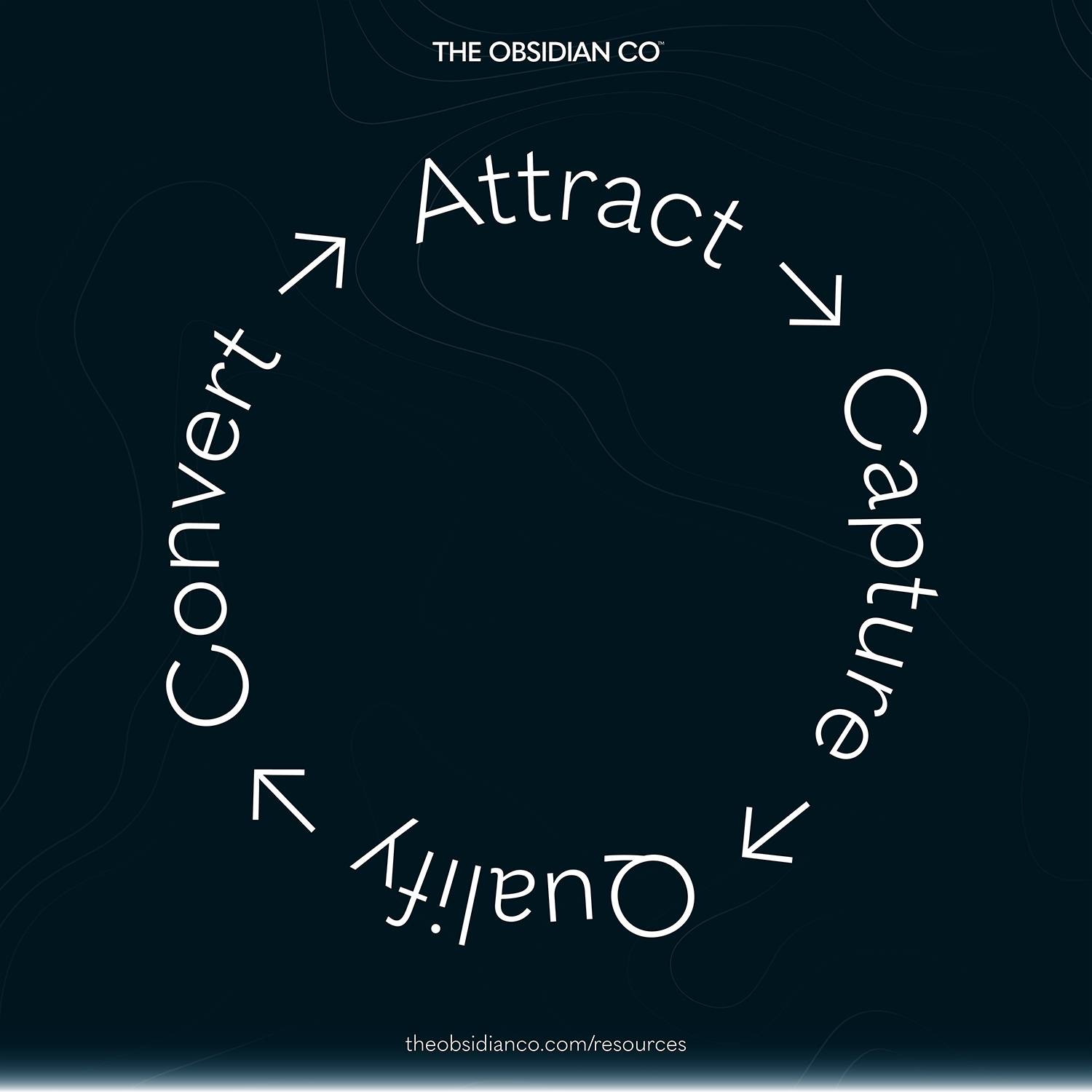
The process moves through four stages: a business attracts prospects, captures their information to create leads, qualifies those leads against defined criteria, and then either hands them to sales or closes them through a self-serve journey. A lead has taken a measurable action that signals interest, which separates them from a visitor who browses and leaves.
Lead generation feeds a predictable pipeline of potential customers, which underpins sustained sales growth. Consistent lead flow replaces revenue volatility with forecastable demand, letting a business plan resourcing, hiring, and investment against expected sales volume.
It pushes a brand into new segments, geographies, and customer groups, building familiarity even among prospects who do not convert immediately. That compounding awareness raises future conversion rates, because prospects already recognise the brand when they re-enter the buying cycle.
Effort focuses on prospects who align with the business in fit and intent, reducing spend on low-probability buyers. This discipline raises lead quality, the degree to which a lead matches the ideal customer profile.
Marketing and sales must agree on a shared ideal customer profile (ICP) and a common definition of a qualified lead, ending the separate assumptions each function otherwise works under.
Lead generation drives revenue growth, but volume alone does not determine the outcome. Revenue depends on lead quality, conversion rates, average deal size, and customer lifetime value, and each variable shapes how much a lead is ultimately worth.
A small set of well-qualified leads can generate more revenue than a large volume of low-intent leads, because leads filtered for fit and intent convert at higher rates and at higher values. Lead generation aimed at the wrong personas or markets increases spend without a proportional increase in revenue. ICP misalignment is a primary reason campaigns inflate cost while pipeline stalls.
In many B2B contexts, lead-generation activity today produces revenue months later because longer sales cycles delay closure. Evaluate revenue impact across windows that align with the sales cycle rather than within a single reporting month.
Yes, lead generation improves sales pipeline performance by increasing opportunity volume, progression speed, win rates, and total pipeline value. Pipeline performance measures movement, not lead count: the combined health of opportunity creation, stage progression, and closed-won value.
Better-qualified prospects create more genuine opportunities, reduce drop-off between stages, and lift win rates, which produces fewer dead deals and a more predictable forecast.
Better-matched leads require fewer touches to convert, increasing pipeline velocity and shortening the sales cycle because prospects who match the ICP need less convincing.
When lead generation absorbs sales feedback, the pipeline carries fewer stuck deals and fewer unqualified opportunities, and that feedback loop keeps the pipeline balanced over time.
An effective lead generation process combines a defined ICP, structured stages, documented handoffs, and continuous feedback loops. Each characteristic removes a specific source of waste or friction, with clear personas and well-defined stages from visitor to customer as the structural foundation.
The strongest processes share five traits:
Effective processes measure and optimise decisions against lead quality, conversion rates, and pipeline outcomes, rather than relying on instinct, which distinguishes a process that improves from one that repeats the same mistakes.
Strong programmes integrate inbound channels (content, SEO, social, paid) with outbound channels (email, calling, events), so each reinforces the others rather than competing.
CRM systems, marketing automation, and lead-scoring models sustain repeatable execution as volume grows and manual effort can no longer keep pace. Compliance underpins it all: GDPR adherence, opt-in practices, and accurate messaging.
Lead generation divides into two primary approaches: inbound and outbound. Inbound attracts leads who come to the business through content, SEO, social media, and webinars. Outbound reaches prospects directly through cold email, cold calls, direct messages, and events. The distinction is direction: who initiates contact.
Channels split by medium. Digital channels include the website, search, paid ads, email, and social. Offline channels include events, trade shows, print, and direct mail, each suited to different audiences and budgets.
Leads are also classified by type:
B2B lead generation leans on targeted, account-based, relationship-driven tactics, while B2C runs on higher volume and shorter cycles, a difference in structure rather than channel.
B2C lead generation is the process of attracting, capturing, and nurturing individual consumers or households into paying customers. It targets individuals, not organisations, which sets it apart from B2B lead generation in terms of volume, value, and decision speed.
Common B2C tactics map to clear stages in the consumer funnel:
The Obsidian Co builds each B2C program around defined shopper segments, demand creation across social and search, conversion-optimised journeys, and revenue outcomes it can measure. The same system is repeated across e-commerce, retail, and consumer services, with the offer and messaging tuned to each audience.
The method runs across five connected stages:
The Obsidian Co documents these stages across its digital marketing case studies, where each campaign follows the same pattern of persona, channel, offer, then tracked outcome.
B2B lead generation is the process of identifying, attracting, and engaging other businesses that match an ideal customer profile, typically involving multiple stakeholders and longer decision cycles. It targets accounts, not individuals, which distinguishes it from B2C lead generation in terms of the buying unit's complexity.
A B2B purchase often involves a buying committee, technical evaluators, financial approvers, and end users, each with distinct priorities. Higher deal values and multi-stage evaluation extend the cycle and raise the cost of targeting the wrong account.
Common B2B strategies operate at the account level:
B2B leads progress from MQL to SQL to Opportunity, with each stage tracked in a CRM where marketing and sales collaborate. That shared system keeps long, multi-touch cycles accountable.
The Obsidian Co builds each B2B program around two or three high-value segments, then matches every segment to the channel, message, and proof that move it.
The method runs across five connected stages:
This approach ties experiments to one commercial KPI, so The Obsidian Co can test a new persona, offer, or position and read the result against pipeline rather than vanity metrics. The Obsidian Co connects segment definition, positioning, and measurement into one accountable system that withstands long, multi-touch B2B cycles.
Lead generation services are agencies, specialist providers, or platforms that identify, contact, and qualify potential leads on a business's behalf. They serve as an external extension of the sales and marketing operations, often integrating directly with internal sales teams rather than operating independently.
Typical scopes of work include list building and data enrichment, outbound outreach by email and phone, appointment setting, inbound campaign management, lead qualification, and nurturing. A business can outsource these as modular activities or as a full programme.
Companies use these services for specific reasons: limited internal capacity, the need for faster pipeline growth, access to specialist expertise, or entry into a new market without building an in-house team first. Market entry is a common trigger, because external providers already hold the data and processes a new market requires.
Providers plug into a client's CRM, marketing stack, and sales workflow so leads arrive in a usable form. That integration determines whether outsourced leads convert or stall at the handoff.
Lead generation services are classified by functional focus, engagement model, and specialisation. Each classification answers a different procurement question: what the provider does, how it charges, and which market it knows.
By functional focus, providers fall into four groups:
Engagement models determine how cost maps to outcome:
Each model demands a different way of evaluating return. Some providers focus on specific sectors such as SaaS, real estate, healthcare, and manufacturing, tailoring their data sources, messaging, and qualification criteria to those industries, thereby improving lead relevance. A further distinction separates tactical providers that only execute outreach from strategic partners that also define the ICP, test messaging, and optimise the funnel: the difference between buying activity and buying outcomes.
Lead conversion depends on lead fit, intent level, problem urgency, and budget authority, not lead volume. A prospect who matches the ICP and holds buying authority converts more readily than a high volume of poorly matched contacts. Speed-to-lead and consistent, relevant follow-up strongly affect conversion, particularly in B2B, because intent decays quickly after the initial action.
The clarity of the value proposition, the strength of the call to action, landing page quality, form friction, and social proof such as testimonials, case studies, and reviews each raise or lower the rate. Form friction and weak proof are common, fixable points of loss. Email sequences, content offers, webinars, and demos build trust and move leads through awareness, consideration, and decision, which matters most in longer cycles.
Sales skill, outreach consistency, alignment between marketing promises and sales conversations, and pricing fit all influence whether a qualified lead becomes a customer. A mismatch between marketing's promise and the sales conversation erodes trust at the decisive moment.
Lead generation performance is measured across four dimensions: volume, efficiency, quality, and revenue impact. No single number captures it, and a framework that ignores any dimension produces a distorted view.
Volume and conversion metrics track movement through the funnel:
The core formula: conversion rate = (number of conversions ÷ total visitors or leads) × 100.
Cost and efficiency metrics measure what each result costs:
CPL and CAC check volume against value; high lead counts mean little when acquisition cost exceeds customer value.
Value and pipeline metrics connect activity to worth: average deal size, pipeline value, lead-to-customer rate, customer lifetime value (LTV), and pipeline contribution by campaign or team. These link lead activity to financial outcomes and feed into the ROI calculation defined in the next section.
Lead generation ROI measures the revenue generated by lead-generation efforts relative to the cost of those efforts. It converts activity into a financial verdict that determines whether a programme justifies its budget.
The core formula:
ROI (%) = [(Revenue generated − Cost of lead generation) ÷ Cost of lead generation] × 100
Revenue counts closed-won deals attributable to lead generation. Cost includes media spend, tools, agency fees, and relevant internal time. Omitting any cost component inflates the result and distorts the decision.
LTV, CAC, CPL, and lead-to-customer conversion rates forecast and explain ROI, especially in subscription and SaaS models where revenue accrues over time, and a single customer pays across multiple periods.
Attribution models first-touch, last-touch, and multi-touch- assign revenue to the campaigns that produced it, and each distributes credit differently. Match the ROI window to the sales cycle: short-term for fast B2C sales, medium to long-term for B2B with extended cycles.
The LTV: CAC ratio, with 3:1 as a healthy benchmark, along with the payback period and lead velocity rate, qualifies the headline ROI figure rather than replacing it, and reveals whether a positive ROI is sustainable or temporary.



.jpg)

.jpg)
.jpg)